
Science and Research in Kenya :Kijani ni ya ardhi
In dealing with climate change,though we are not there yet Kenya has made key efforts in climate change mitigation and adaptation.Kenya is very vulnerable since a large part of the informal sector relies on marine and the blue economy and an even larger part on rain-fed agriculture.Although Kenya contributes little to the global carbon emission it suffers greatly from the adverse effects of climate change.Dealing with global crises such as this goes beyond the common mwananchi,creating a very significant task for the government.This has led to creation of various policies that help mitigate,adapt and deal with calamities as a result of climate change.

Restoration of the rivers in Nirobi meeting/OnPoint News
The only way the country could ever deal wh a global crisis such as climate change is hrough science,research and innovation.This requires a huge allocation from the national budget.Kenya in order to meet its research and science needs in the field of climate mitigation and adaptation requires approximately KES 6.775 trillion to rolll out its policies between 2020 and 2030.Eighty seven percent of the total financing is said must come from external sources since the country’s domestic resources falls significantly short of these target. Since Kenya is not entirely responsible for climate change not even in the least sense,it has been argued that the wealthier,industrialized countries are morally responsible to pay a large share of the cost of global climate change mitigation.As a result the Copenhagen Green Climate Fund was established during he 2010 United Nations Climate Change Conference in Cancun and was adopted at the 2011 United Nations Climate Change Conference in Durban South Africa.
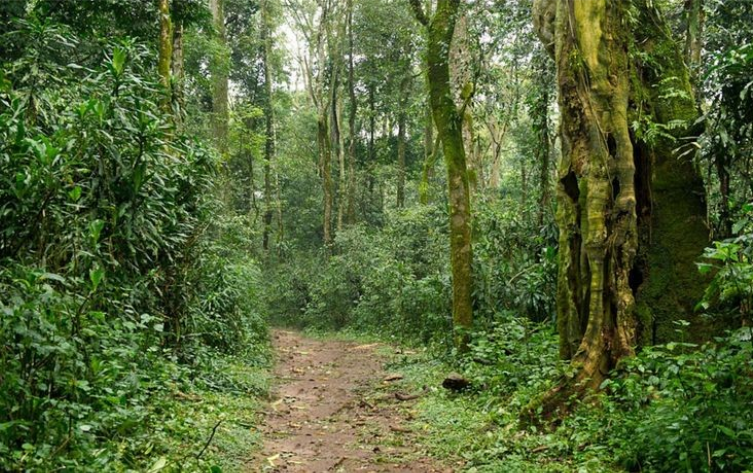
Kakamega forest/Natural World Kenya Safaris
Apart from the disaster relief funds,a large amount of money goes into research as evidenced by Climate Change Directorate ,under the Ministry of Environment,Climate Change and Forestry. Research and technical institutions under the government actively lead in climate change research .The institutions include The Kenya Forestry Research Institution ,The Kenya Meteorological Department and The Kenya Agricultural and Research Organization.The Kenya Forestry research Institution conducts research involved in investigating costs and benefits of climate change to stakeholders dependent onforest resources in the country.Climate change is pervasive and a collective action problem requiring many stakeholders from both the public and private sector.Kenya’s private sector is a stable one with multiple organization on the forefront helping with the mitigation and adaptation through public-private partnerships.Companies like SunCulture and M-Kopa give solar powered solutions to reduce fossil fuel consumption and enhance energy access.In the field of renewable energy,foreign private actors have invested greatly in theLake Turkana Wind Power Project.A good number of companies and members of the public have committed to planting trees and monitoring their carbon emissions.The Kenya Climate Change and Health Strategy, 2024-2029 aims to equip the nation with a robust plan to tackle climate change and health issues over the medium to long term.On matters health,the center for Epidemiological Modelling and Analysis (CEMA) has brought together experts to generate insights that directly inform policy and decision making. Effects of climate channge manifest in ways the government is normally limited in its ways to fix.This is seen in the desert locust invasion of December 2019,foood posoning ,heat waves and Mt.Kenya losing 92% of its ice mass.This has shown the need to increase effots and funding put into research.Kenya could do more if the public had enough confidence in the government :a product of the government first displaying their fiscal discipline,transparency and accountability.
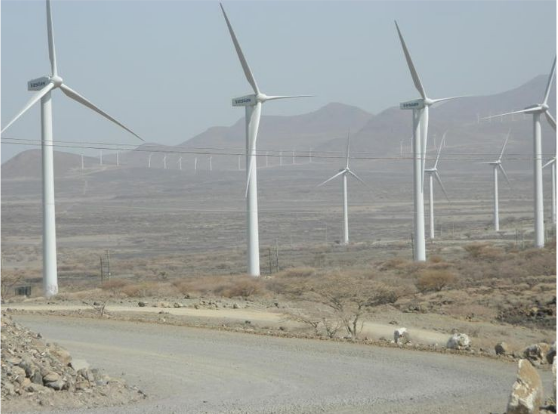
Renewable energy/Standardmedia.co.ke
